
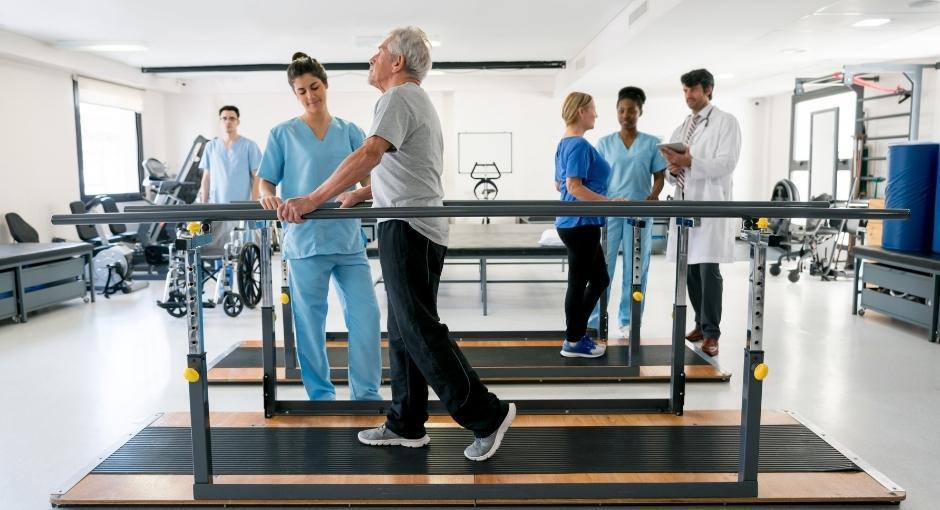
Parkinson’s disease is a progressive neurological condition that affects movement, balance, and coordination — but its impact on daily life can be significantly reduced with the right physiotherapy support. While there is currently no cure for Parkinson’s physiotherapy management in Courtice is one of the most evidence-supported interventions for slowing the progression of motor symptoms, maintaining independence, and improving quality of life at every stage of the condition.
At Active Recovery Sports Injury & Physiotherapy Courtice, our physiotherapists work with patients living with Parkinson’s disease across Durham Region — providing individualised exercise programs, balance and gait training, fall prevention strategies, and education that makes a real difference in daily function and confidence.
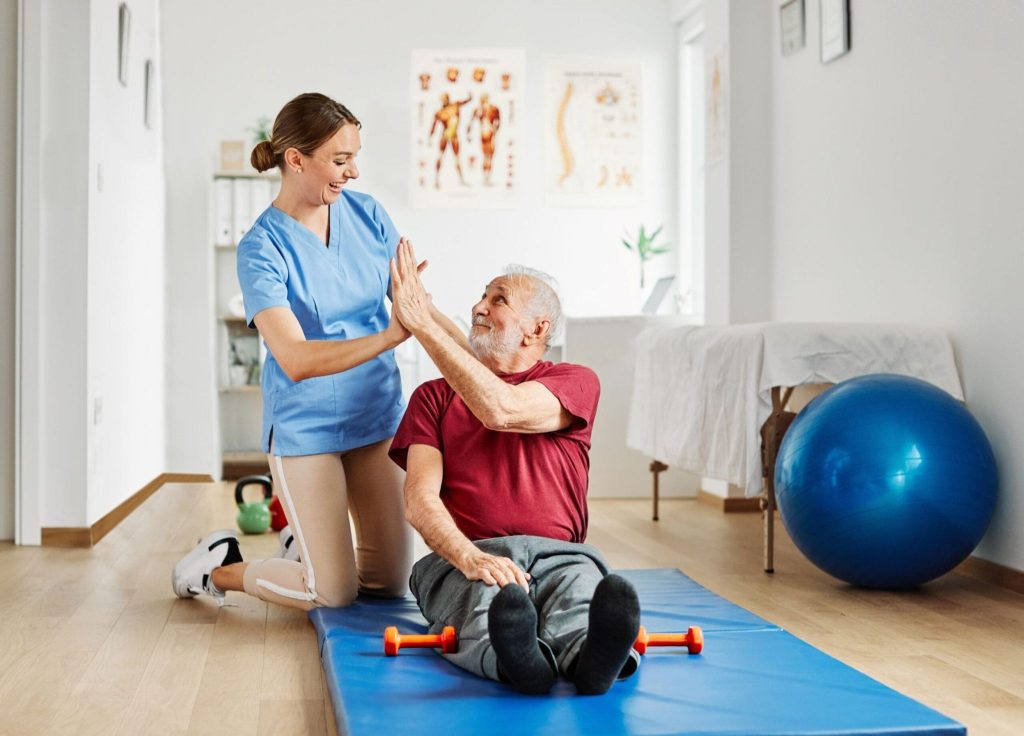
Understanding Parkinson’s Disease and Its Physical Effects
Parkinson’s disease results from the progressive loss of dopamine-producing neurons in the substantia nigra — a region of the brain involved in coordinating smooth, controlled movement. As dopamine levels decline, the motor control system becomes less efficient, producing the characteristic physical symptoms of Parkinson’s:
- Tremor: Involuntary shaking, most often affecting the hands, fingers, or chin at rest. This is typically the most visible symptom and the one most associated with Parkinson’s in public awareness.
- Rigidity: Increased muscle stiffness and resistance to passive movement. Rigidity affects the trunk, limbs, and neck — contributing to a stooped posture, reduced arm swing during walking, and the characteristic ‘cog-wheel’ resistance felt on examination.
- Bradykinesia: Slowness of movement, affecting the initiation, speed, and amplitude of movement. Bradykinesia is the most disabling symptom for most people, making everyday tasks like buttoning clothing, rising from a chair, or walking take significantly longer than before.
- Postural instability: Impaired balance and postural reflexes, particularly in the later stages of Parkinson’s, significantly increase fall risk.
- Gait changes: Shuffling steps, reduced stride length, festination (involuntary acceleration of step rate), and freezing of gait — momentary episodes where movement seems to stop despite intention to walk.
Why exercise matters in Parkinson's: Dopamine plays a central role not just in movement but in the brain's response to exercise. Research shows that vigorous, intentional physical activity stimulates the release of neurotrophic factors — brain chemicals that protect remaining dopamine neurons and support the development of new neural pathways. Exercise is neuroprotective in Parkinson's in ways that no medication currently matches.
The Canadian Physiotherapy Association identifies physiotherapy as a core component of Parkinson’s disease management, with strong evidence supporting exercise-based rehabilitation for improving gait speed, balance, functional mobility, and quality of life.
Effective Parkinson’s disease Physiotherapy Management in Courtice: Our Approach
Balance and Fall Prevention
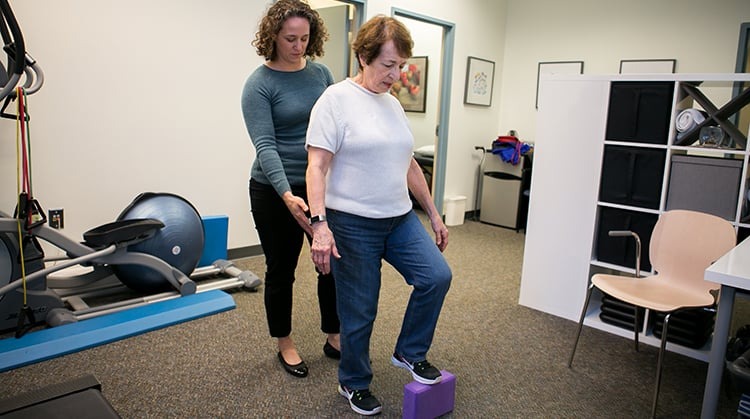
Falls are the most serious physical consequence of Parkinson’s disease — and they are not inevitable. Physiotherapy-based balance training specifically targets the postural reflexes and automatic balance reactions that Parkinson’s impairs. Programs include reactive balance training (responding to unexpected perturbations), dual-task training (maintaining balance while performing cognitive or physical secondary tasks), and anticipatory postural adjustment exercises.
Fall prevention in Parkinson’s also involves environmental assessment, footwear advice, and the management of freezing of gait — strategies that have documented effectiveness for reducing falls in community-dwelling people with Parkinson’s.
At Active Recovery Sports Injury & Physiotherapy Courtice, our physiotherapy services in Courtice include individualised balance and fall prevention programs for patients with Parkinson’s — tailored to disease stage and current functional level.
Gait Training and Movement Amplitude
One of the most evidence-supported interventions for Parkinson’s gait is the LSVT BIG program — an amplitude-based rehabilitation approach that trains patients to make bigger movements, counteracting the bradykinesia-driven tendency toward smaller, slower, more effortful movements. The underlying principle is that people with Parkinson’s progressively scale down the amplitude of their movements, often without awareness, because larger movements feel exaggerated. LSVT BIG recalibrates this perception through intensive, high-amplitude practice.
Physiotherapy gait training also uses external cueing strategies — rhythmic auditory cues (metronome), visual cues (floor markings), and attentional strategies — to bypass the defective automatic movement systems and support more normal gait patterns.
Strength and Functional Exercise
Progressive resistance training is particularly important in Parkinson’s because both the disease itself and the relative inactivity it can produce lead to muscle weakness, particularly in the lower limbs, core, and postural muscles. Physiotherapy-prescribed strength programs target the muscles most critical for mobility, transfers, and fall prevention.
Posture and Thoracic Mobility
The characteristic forward-flexed (camptocormia) posture of Parkinson’s is driven by rigidity of the trunk flexors and reduced activation of the trunk extensors. Physiotherapy addresses this through active thoracic extension exercises, manual therapy to the thoracic spine and rib cage, and postural awareness training. Improving thoracic mobility has the additional benefit of improving respiratory function — an increasingly important consideration in later-stage Parkinson’s.
Respiratory Function
Respiratory muscles are affected by Parkinson’s — producing reduced lung capacity, weakened cough, and increased risk of respiratory complications. Physiotherapy-prescribed breathing exercises, chest expansion work, and positioning strategies address respiratory function and help maintain pulmonary health.
Managing Freezing of Gait
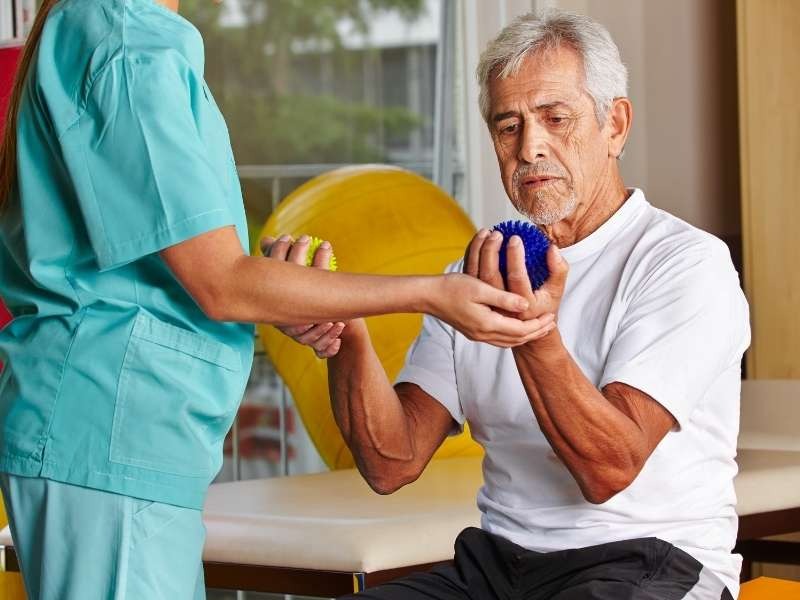
Freezing of gait — the sudden, transient inability to initiate or continue walking despite intention to do so — is one of the most disabling and dangerous Parkinson’s symptoms. Physiotherapy provides specific evidence-based strategies for managing freezing, including:
- Rhythmic auditory cueing: Using a metronome (phone app or dedicated device) set to the target cadence to maintain rhythmic stepping and reduce freeze episodes.
- Visual cueing: Step-over targets (lines on the floor, laser pointer devices) that trigger the visual system to initiate movement when the automatic system has frozen.
- Motor imagery and attentional strategies: Directing conscious attention to specific movement components (lift the foot, shift weight, step through) that can bypass the defective automatic motor loop.
- Environment modification: Identifying and modifying high-risk freezing triggers — doorways, narrow spaces, turning — to reduce freeze frequency in the home.
The Cochrane Library supports exercise-based physiotherapy for Parkinson’s disease, with evidence confirming improvements in gait, balance, strength, and functional mobility — with the greatest effect sizes associated with high-intensity, task-specific exercise programs.
The Parkinson’s disease Physiotherapy Assessment at Active Recovery Sports Injury & Physiotherapy Courtice,
When a patient with Parkinson’s begins physiotherapy at Active Recovery Sports Injury & Physiotherapy Courtice, the assessment covers current motor symptoms and their functional impact, fall history and risk factors, gait analysis, balance testing, strength assessment, posture, respiratory function, home environment, and the patient’s personal goals for treatment. This comprehensive baseline guides the development of an individualised program that is appropriate to the patient’s current stage and that adapts as the condition evolves.
Patients with Parkinson’s may also benefit from chiropody and foot care services in Courtice, as foot health and appropriate footwear are directly relevant to balance and safe ambulation in Parkinson’s disease.
Serving Our Local Community. At Active Recovery Sports Injury & Physiotherapy, we regularly work with patients living with Parkinson’s disease from Courtice, Pickering, Oshawa, Bowmanville, and surrounding Durham Region communities. Our registered physiotherapists understand the progressive nature of Parkinson’s and are committed to helping patients maintain mobility, independence, and quality of life at every stage. Book an appointment today to speak with a physiotherapist about your care.
Recommended Home Exercise Equipment
For patients with Parkinson’s, physiotherapists often recommend specific low-impact equipment to maintain the gains made in the clinic.
If you are looking for tools to support your home exercise program, consider these options:
- Motorised Arm and Leg Exercise Cycle: This electric-powered exerciser provides automated motion for both arms and legs. It is ideal for passive exercise and rehabilitation when manual effort is difficult.
- Vissco New Cycle Exerciser: A compact and lightweight manual pedal exerciser. It features an adjustable resistance knob to customise workout intensity for muscle strengthening.
- Electric Pedal Exerciser Bike: Designed for stroke and Parkinson’s recovery, this motorised bike features 12 speed settings and a remote control for ease of use.
Frequently Asked Questions: Physiotherapy for Parkinson’s disease in Courtice
At what stage of Parkinson’s should I start physiotherapy?
As early as possible — ideally at or shortly after diagnosis. Early physiotherapy establishes baseline function, builds the exercise habits and movement skills that maintain motor function as the disease progresses, and provides the strongest neuroprotective benefit. Physiotherapy is also effective and beneficial at every subsequent stage of Parkinson’s.
How often should I do physiotherapy for Parkinson’s?
Research suggests that high-intensity exercise — 3 to 5 sessions per week — produces the best outcomes for Parkinson’s. In practice, a combination of supervised clinic sessions and a well-designed home exercise program is the most practical approach. Your physiotherapist will recommend a frequency and format appropriate to your current level of function and available support.
Can physiotherapy prevent falls in Parkinson’s?
Yes. Evidence consistently shows that physiotherapy-based balance training and fall prevention programs significantly reduce fall frequency in people with Parkinson’s disease. The most effective programs combine balance-specific exercises, gait training, and falls education.
Does physiotherapy slow Parkinson’s progression?
Physiotherapy cannot stop the underlying neurodegeneration of Parkinson’s disease, but regular vigorous exercise has documented neuroprotective effects — stimulating brain-derived neurotrophic factor (BDNF) and other factors that protect remaining dopamine neurons and support neural plasticity. Exercise is the only currently known intervention with this neuroprotective evidence base in Parkinson’s.
Can I do physiotherapy alongside my Parkinson’s medication?
Yes — and timing exercise with peak medication effect (the period of best motor function after a levodopa dose) can significantly improve the quality and outcome of physiotherapy sessions. Discuss the timing of your exercise sessions with your neurologist and physiotherapist.
Book a Parkinson’s Physiotherapy Assessment at Active Recovery Sports Injury & Physiotherapy Courtice,
Whether you are newly diagnosed or have been living with Parkinson’s for years, physiotherapy can help you maintain movement, reduce fall risk, and live more fully.
Active Recovery Sports Injury & Physiotherapy Courtice serves patients from Courtice, Pickering, Oshawa, Bowmanville, and across Durham Region. Contact us to learn more about our dedicated Parkinson’s physiotherapy management in Courtice.
📍 Locations: 1450 Durham Regional Hwy 2, Courtice, ON L1E 3C3
📅 Book your appointment today at activerecoveryclinic.ca
Disclaimer: This blog is for informational purposes only and does not constitute medical advice. Please consult a registered physiotherapist or neurologist for a personalised Parkinson’s care plan.
